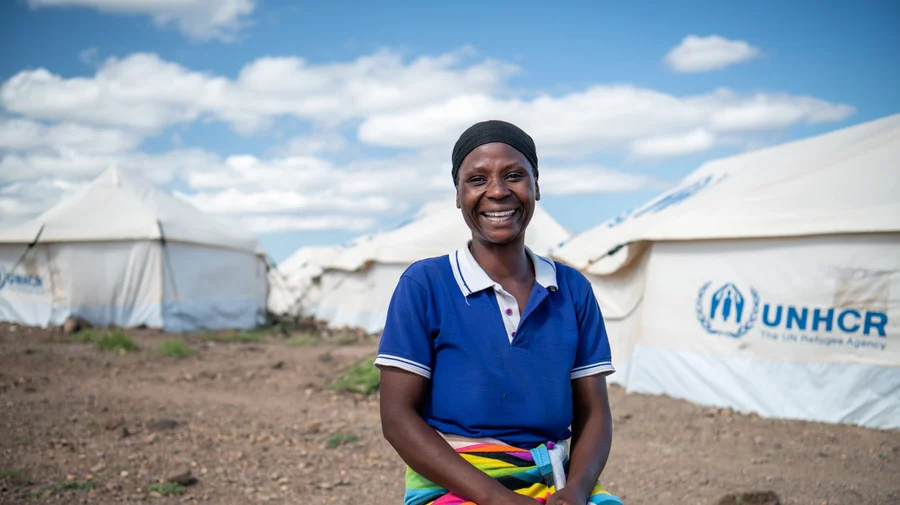
Kenya has since independence been a safe zone for nationalities from neighboring countries that have been facing war, conflict and persecution.
Geopolitically, Kenya has frequently been described as an “island of stability” or an “island of peace” because it has avoided the large-scale civil wars and state collapses that have affected several of neighbors, such as Somalia, South Sudan, Ethiopia, and the DRC.
Ongoing wars in the horn of Africa, continues to lead to inflow of asylum seekers with their numbers in 2026 hitting 226,000 with refugees reaching 636,000.
A refugee is a person who has been forced to flee their country because of conflict, persecution or serious threats to their safety and has been recognized as needing international protection.
An asylum seeker, on the other hand, is someone who has fled their country and applied for international protection but whose claim has not yet been finally determined.
According to Kenya National Bureau of Statistics (KNBS) Somalis make up the largest share of Kenya’s combined registered refugee and asylum-seeker population, with 459,131 people, accounting for 54.9 per cent of the total.
They are followed by South Sudanese at 202,863, representing about 24.3 per cent, The DRC comes third with 66,043, followed by Ethiopia with 42,897 and Burundi with 34,585, Sudanese nationals stood at 13,349, while Uganda had 4,307 and Eritrea 7,839.
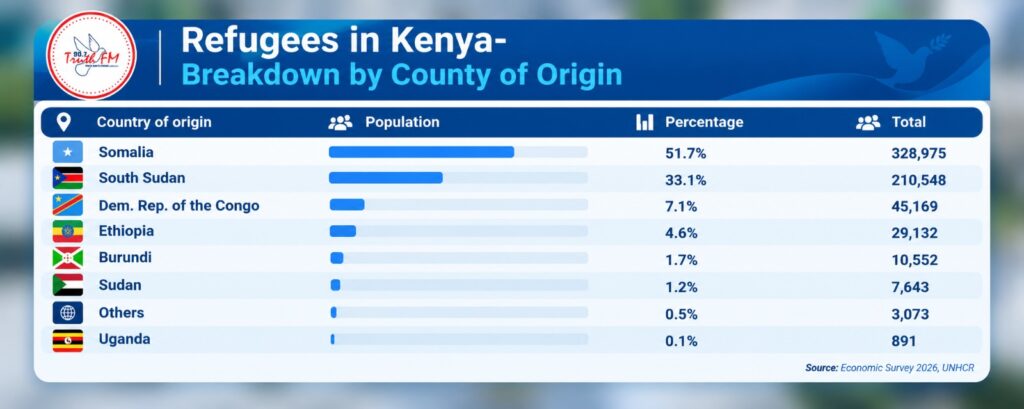
According to the Kenya Economic Survey Somalia accounted for 65.2 % of asylum seekers with the total number standing at 149,221, Burundi came second with 24,489 (10.7%) while DRC had 21,761(9.5%).
Other nations with significant number of asylum seekers in Kenya include Uganda Ethiopia, Sudan and South Sudan.
The number of refugees and asylum seekers from Eritrea nearly doubled last year, jumping by 99.8% from 3,259 in 2024 to 7,839 in 2025.
The data also shows that children below the age of 18 remain a significant proportion of the refugee and asylum-seeker population.
In 2025, 426,097 children were registered, compared with 409,696 adults.
However, the number of children declined by 3.3 per cent from 439,255 in 2024, while the adult population increased by 6.5 per cent from 384,677.