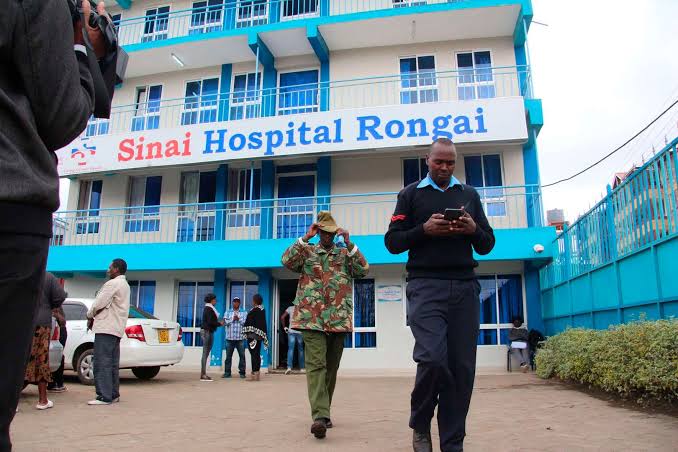
Christmas Day last year, while families across the country sat down to celebrate, Rachel Letoya was racing to hospital. She was having pregnancy complications, and she knew something was wrong.
At Sinai Hospital in Rongai, doctors confirmed her worst fear: the baby was dead.
The medics told her she would have to go into labor and push out the stillborn infant. That, she says, is where everything started going wrong.
“I was forced to push out the baby, yet medically that was not supposed to happen. I was supposed to undergo a Cesarean Section because I have a history of previous C-sections,” Letoya recounts. “I have four scars that are clearly visible.”
She had reason to worry. A classical C-section incision cuts through the muscles of the uterus, the same muscles that contract during labor. Subjecting that scar to the strain of pushing can make it rupture, leading to heavy bleeding, loss of the uterus, or oxygen deprivation that can kill the baby. It is precisely why doctors strongly discourage vaginal delivery for mothers with prior C-sections.
But Rachel’s concerns went unheard. After the delivery, a scan showed placental tissue still inside her womb. She was taken through manual vacuum aspiration to remove it. It didn’t work.
“I asked them what procedure they had done on me, because the scan still showed the placenta in my womb,” she says.
One of the medics, she recalls, admitted there had been an oversight. She was told the staff had been overwhelmed with other patients.
“I wondered whether my case was not important or an emergency enough to warrant full care,” she says.
They scheduled her for a repeat of the procedure, but two days later she was still in the wards
With her condition deteriorating, Rachel left Sinai Hospital and sought help elsewhere, first at Bliss Hospital and then at Kenyatta National Hospital, where she collapsed, underwent surgery, and required a blood transfusion.
Her ordeal would eventually land in Parliament. On February 19 this year, Busia Senator Okiya Omtatah tabled the matter before the Senate, noting that Rachel had been discharged from Sinai in a critical condition despite continued bleeding and a retained placenta confirmed by repeated scans.
The Senator demanded a health committee inquiry into her diagnosis, induction, delivery, management of the bleeding and retained placenta, theater decisions, and whether proper emergency obstetric care and referral protocols were followed.
The fallout has been significant. Sinai Hospital has since been downgraded from Level 4A to Level 3A following a probe into how Rachel’s case was handled.
The investigation, led by the Kenya Medical Practitioners and Dentists Council, the Nursing Council of Kenya, and the Kenya Medical Laboratory Technicians and Technologists Board, uncovered failures at nearly every step: inpatient monitoring, informed consent, medical documentation, and management of the retained placenta.
According to the Ministry of Health report, Rachel was a high-risk patient. Her history of previous caesarean sections meant she needed a doctor experienced in obstetrics and gynecology. Yet investigators found that no obstetrician was at the facility during the entire three days she was admitted.
Worse still, the report found that the medic who performed the procedure was practicing beyond what their professional license permits. Surgical records were incomplete, and nothing on file showed that Rachel had been adequately informed of the risks and possible complications of inducing labor.
The Ministry of Health has now directed the hospital to submit further information to the Kenya Medical Practitioners and Dentists Council’s disciplinary and ethics committee, which will determine whether further administrative or disciplinary action follows, against the facility or the individual providers involved.