It is a daunting task to get hold of Dr. Komu Mutunga for an interview, ever since Kenya reported the first case of Ebola, his itinerary has been busy.
He is part of the team of medical professionals that is involved in the combating and containing the virus.
He is an epidemiologist, a proffesion involving the study of the causes, patterns, and spread of diseases within populations.
He, however, has an interesting way of describing what he does.
“As an epidemiologist, my primary work is to run after outbreaks and diseases.” He lightheartedly says.
He is indeed no stranger to outbreaks and diseases; his career has taken him to areas with mortal danger.
His first assignment was in Iraq in 2009 when the country that was at war at the time experienced the H1N1 flu. This was followed by Polio response in 2014 before he was posted to Liberia as part of the African Union Support to Ebola Outbreak in West Africa (ASEOWA).
All three diseases had been declared Public Health Emergency of International Concern (PHEIC) by the World Health Organization (WHO).
“What scared me the most about Ebola was that if you died in the mission your body would not be brought back home. We Africans have great reverence for the dead. ” He says.
The body of a victim of Ebola is particularly infectious and transporting them over long distances would increase chances of further spreading the virus to flight crews and handlers .
The Liberian government and International Health Agencies implemented strict handling of corpses with most of them being cremated.
“I did not tell most of my friends and family members that I was going to Liberia. There was a lot of discouragement, but I had decided to go and do what is good for mankind. “
In Liberia, Dr.Komu worked as a contact between the community and the hospitals, receiving alerts and dispersing teams to pick up suspected cases.
He says one of the biggest challenges was the cultural regard given to the dead, with some members of the community attempting to carry out burials traditionally in disregard to new procedures put in place after the outbreak.
“We had banned transportation of dead bodies, but the community members found ways of bribing traffic police to let them through. At one point, we received an alert about a body being transported, and we mounted a roadblock.”
“They had passed police roadblocks, but when they reached the one mounted by us, we couldn’t budge. They turned confrontational, and there was a lot of exposure to the dead body in the melee that ensued.”
Luckily for them, the dead person was confirmed not to have been infected with Ebola. Otherwise, he says most of the people in the confrontation, including him and the medical team, would have likely contracted the virus.
Dr. Komu dispels the notion that the virus is a death sentence explaining that with proper care one can safely recover from it.
“Ebola doesn’t have a cure. We manage the symptoms such as fever. If detected early and an infected person is promptly put under medical care their chances of recovery improves.” He explains
He says the most important step is for citizens to understand how the virus is spread and its signs and symptoms so as to react appropriately.
The initial signs include fever, tiredness, weakness, muscle pain, headache and a sore throat.
As the illness progresses, patients may develop vomiting, diarrhea, stomach pain and impaired kidney or liver function.
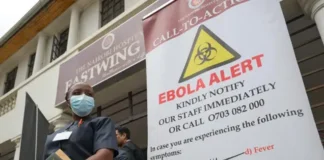
The Ministry of Health has warned Kenyans that the virus exhibits signs that are very similar to malaria.
However, the most traumatic sign is the bleeding that can also occur in later stages.
“The disease leads to inflammation of blood vessels as a reaction to the virus. The inflammation leads to the bursting of vessels leading to hemorrhage.” Dr. Komu explains.
Dr. Komu advises Kenyans to observe high levels of hygiene, including hand washing and disinfecting of surfaces that are frequently touched.
Medics working in isolation and treatment sites are also advised to adhere to guidelines to avoid contracting and spreading the virus.
One of the cases reported in Kenya is that of a 49 year old patient attendant who contracted the virus while on duty.
Unlike the Liberian case, Dr. Komu says so far the handling of the virus in Kenya is above par with all contacts having been traced as at the time of publishing.
The first batch of contacts that came into contact with First case are set to leave quarantine in less than a weeks time if they test negative and show no sign of the disease.
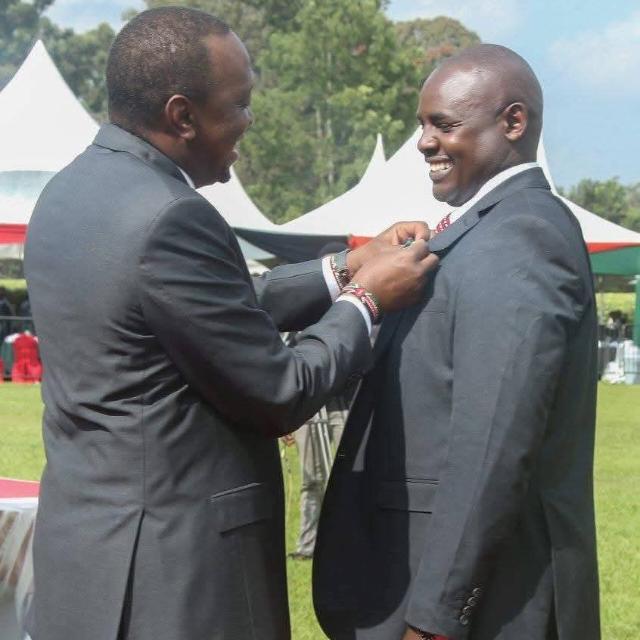
For his contribution to combating Ebola, he was awarded state honors by retired President Uhuru Kenyatta in 2015.