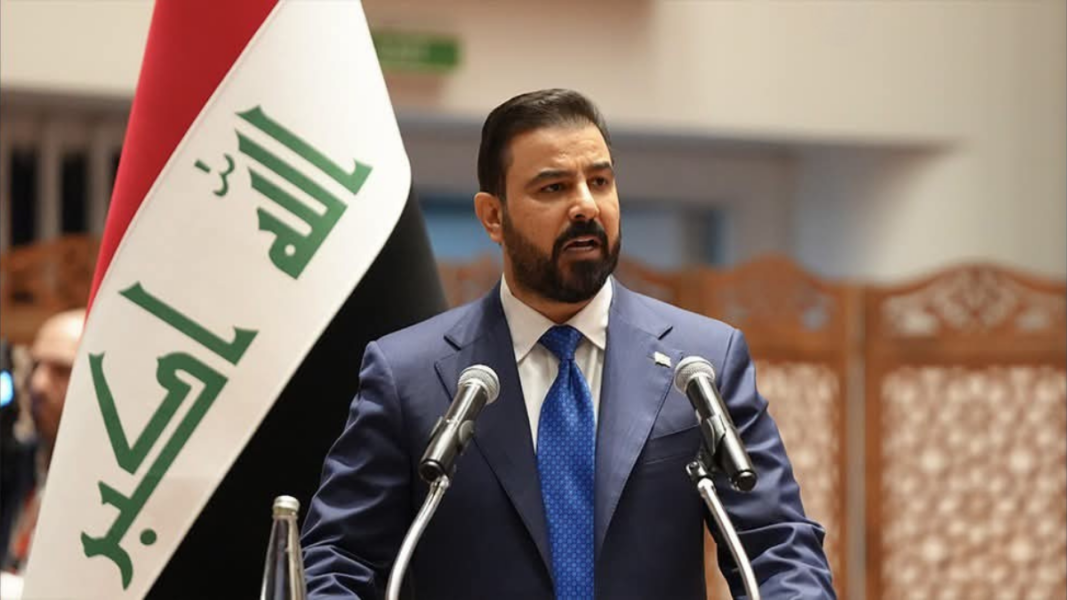
With Christian communities having been woven into the social and cultural fabric of Iraq and after decades of war, persecution and mass emigration, Baghdad is making an unusually direct appeal to those who left: return back home.
Iraqi Prime Minister Ali Falih al-Zaidi has declared the return of Christians who fled the country a “national and government priority”, offering practical incentives including access to a government programme allocating one million residential plots.
The appeal, made during a July 11 meeting with newly elected Chaldean Patriarch Paul III Nona and senior Christian clergy, is being welcomed by church leaders as a potentially significant change in tone. But it also confronts a much harder question:
The new initiative emerged from talks between al-Zaidi and Patriarch Nona, who was elected head of the Chaldean Catholic Church in April and formally installed in Baghdad in May.
Al-Zaidi told the delegation that Christians remain an essential part of Iraq’s national identity and promised government assistance for families considering a return.
“The return of Christians who were forced to leave the country due to the difficult circumstances Iraq endured is a national and government priority.”
He added that Iraq’s strength lies in its “national, religious, and cultural diversity” and in the unity and social cohesion of its people.
Returning Christian families are to be eligible for Iraq’s one-million residential residential land plot programme, while the prime minister has also encouraged Iraqi Christian entrepreneurs and investors living overseas to return and participate in rebuilding the country, particularly in healthcare and education.
Iraq’s Christian communities have historically played a major role in education, medicine and professional life, and Archbishop Bashar Warda of Erbil said al-Zaidi specifically expressed a desire to see Christians working in those fields.
“The Prime Minister has lived among Christians, so he knows them very well.”
Warda said the prime minister had told the delegation to “count on him” for whatever support was needed.
For the Church, that is encouraging. But it is not yet enough to settle the question of whether Christians will actually come back.
Before the 2003 US-led invasion, estimates commonly put Iraq’s Christian population at around 1.5 million. By the 2020s, estimates had fallen dramatically, although there is no universally accepted current census figure.
The US State Department’s most recent detailed religious-freedom reporting estimated that fewer than 150,000 Christians remained in Iraq, while other assessments have placed the figure higher, at under 250,000 or around 300,000. The discrepancy itself is a reminder that Iraq’s Christian population is difficult to count accurately.
The collapse accelerated after 2003, as sectarian violence, political instability and attacks on religious minorities drove successive waves of emigration.
Then came the catastrophe of 2014.
When Islamic State swept across northern Iraq, Christians in Mosul and the surrounding Nineveh Plains were given an impossible choice: flee, convert, pay a tax imposed on non-Muslims, or face the consequences of remaining.
Thousands fled almost overnight.
The United Nations Investigative Team to Promote Accountability for Crimes Committed by Da’esh (UNITAD) subsequently concluded that there were reasonable grounds to believe that Islamic State committed international crimes against Christians in and around Mosul and the Nineveh Plains between 2014 and 2017, including war crimes and crimes against humanity.
The destruction was not merely physical.
Homes were seized. Churches were desecrated or destroyed. Families were scattered across Iraq, the wider Middle East, Europe, Australia and North America.
And even after Islamic State was defeated, many Christians discovered that defeating the militants did not automatically restore the conditions that had existed before them.
There however has been a return just not in a large scale; In places such as Qaraqosh, Karamlesh and other towns of the Nineveh Plains, churches have been rebuilt, houses repaired and businesses reopened.
The UN Development Programme says its post-ISIS stabilization programme has completed thousands of projects across Iraq and helped millions of Iraqis return home. Its work has included restoring homes, schools, hospitals, electricity, water networks and livelihoods in areas devastated by the conflict.
Mosul itself has also undergone a remarkable reconstruction effort.
The restoration of churches, mosques and historic buildings has become part of a broader attempt to restore not simply infrastructure but the city’s identity as a place in which different religious communities once lived alongside one another.
In late 2025, Nineveh authorities announced plans aimed specifically at facilitating the return of displaced Christians to Mosul and the surrounding areas, with damaged neighbourhoods being rehabilitated and essential services restored.
The Chaldean Archbishop of Mosul, Michaeel Najeeb, described the transformation cautiously but optimistically.
He told Vatican News that security, construction and infrastructure had improved and that relations between Christians and Muslim neighbours were also changing.
“Everyone lives in fraternity with mutual respect.”
Yet Najeeb also acknowledged that the return of Christian families to Mosul itself remained cautious, even as the return to parts of the Nineveh Plains had been more significant.
Archbishop Warda described the prime minister’s appeal as something the Church welcomed, and the country’s Catholic bishops were scheduled to discuss the proposal at their August meeting in Ankawa.
The Assembly of the Catholic Bishops of Iraq includes representatives of the Chaldean, Syriac Catholic, Armenian Catholic and Melkite Churches, along with a representative of Iraq’s small Roman Catholic community.