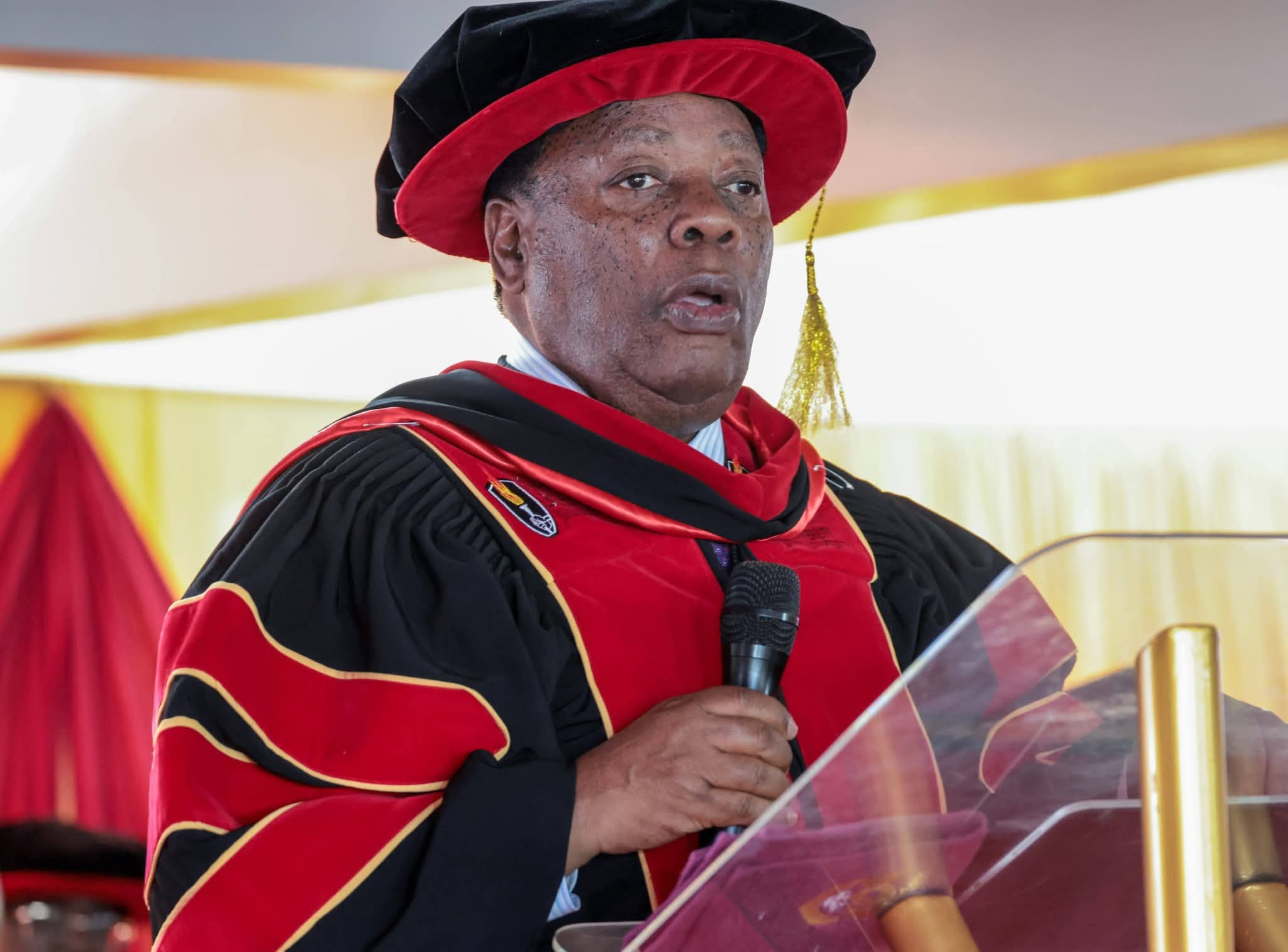
Deliverance Church Umoja Senior Pastor Bishop John Brown Masinde challenged Christians to examine whether their conduct reflects the faith they profess, urging believers to live lives that can withstand scrutiny and positively influence the younger generation.
Speaking during the installation of Professor Kivutha Kibwana as the Chancellor of International Leadership University (ILU), Bishop Masinde posed a striking question to believers, asking whether there would be sufficient evidence to identify them as Christians if their faith were placed on trial.
“The question is, if today you are taken to court and accused of being a Christian, will there be enough evidence to convict you?”
He said Christian identity should be demonstrated not only through words, worship and public declarations of faith, but also through everyday conduct.
The pastor likened the situation to a court where an accused person could be acquitted because of insufficient evidence.
“Some of these people will be acquitted for lack of evidence,” he said, adding that believers should strive to have conduct that demonstrates the faith they profess.
He urged Christians to become examples to younger people, saying the emerging generation is paying close attention to whether the character of adults matches their words.
“Let our lives influence others, especially the younger generation,” he said.
The pastor warned against a disconnect between Christian preaching and personal behaviour, observing that young people increasingly demand authenticity from those who seek to guide them.
“Yes, we can hear you preaching water, but you look like you are drinking wine. We can hear what you say, but your character does not reflect what you say.”
He challenged churches, Christian institutions and individual believers to raise people whose actions correspond with their speech.
“Can we raise people whose conduct can be the same as their speech?”
The Bishop also used his message to call for greater love and unity among Kenya’s diverse communities, saying Christians have a responsibility to demonstrate reconciliation in a multi-ethnic society.
“Kenya needs love. We are a multi-ethnic society.”
He challenged Kenyans, including political leaders, to reject tribal divisions and instead build relationships that reflect the Christian command to love and care for one another.
Drawing from his own family experience, he said his children had married into different communities from Busia, Meru, Kiambu and in Kamba land, giving him a personal connection to several parts of the country.
“Where do I go? Whom do I insult? Whom do I call names?” He asked.
The Bishop said such family relationships demonstrate how intermarriage and interaction between communities can challenge tribal attitudes and encourage national unity.
“Some of these things we are talking about are tribal. Let’s remember, we are in this nation together. We should reach out to one another.”
According to the Bishop, Christian influence should be seen in the way believers love, care for and honour people from communities different from their own.
He pointed to his ability to speak several Kenyan languages as an example of his engagement with different communities.
“I can speak in Kamba. I can speak Kikuyu. I can speak Ekegusi. And why? Because I love all these communities.”
He said his years of ministry across different counties had enabled him to interact with Christians from diverse backgrounds and witness people give their lives to Christ.
“You cannot turn my heart against any community in this country,” he said, explaining that his family relationships and ministry connections cut across ethnic boundaries.
He encouraged Christians to make others feel accepted rather than excluded.
“Showing them you are welcome. You are a part of me. You are a part of my society. I honor you and respect you.”
Bishop Masinde further encouraged families to embrace intermarriage and raise children who see Kenya as one community rather than a collection of competing ethnic groups.
He shared that two of his daughters are married to Kamba men and that he has six Kamba grandchildren, using his family as an illustration of the bonds that can exist across ethnic communities.
The message ultimately called on Christians to consider the influence of their conduct, love and faith on the people around them.
The Bishop urged believers to ensure that Christianity is not merely something they profess but something reflected in how they treat others.
“Let us show, influence people by the way we love. Reaching out to other communities.”
He concluded by urging Christians to use their faith as a positive force in society.
“By our faith, let us also influence positively.”