Kenya’s move to convert three major Chinese loans from the US dollar to the Chinese yuan has sparked a warning from the International Monetary Fund (IMF), which says the decision, while offering short-term relief, could expose the country to new currency risks.
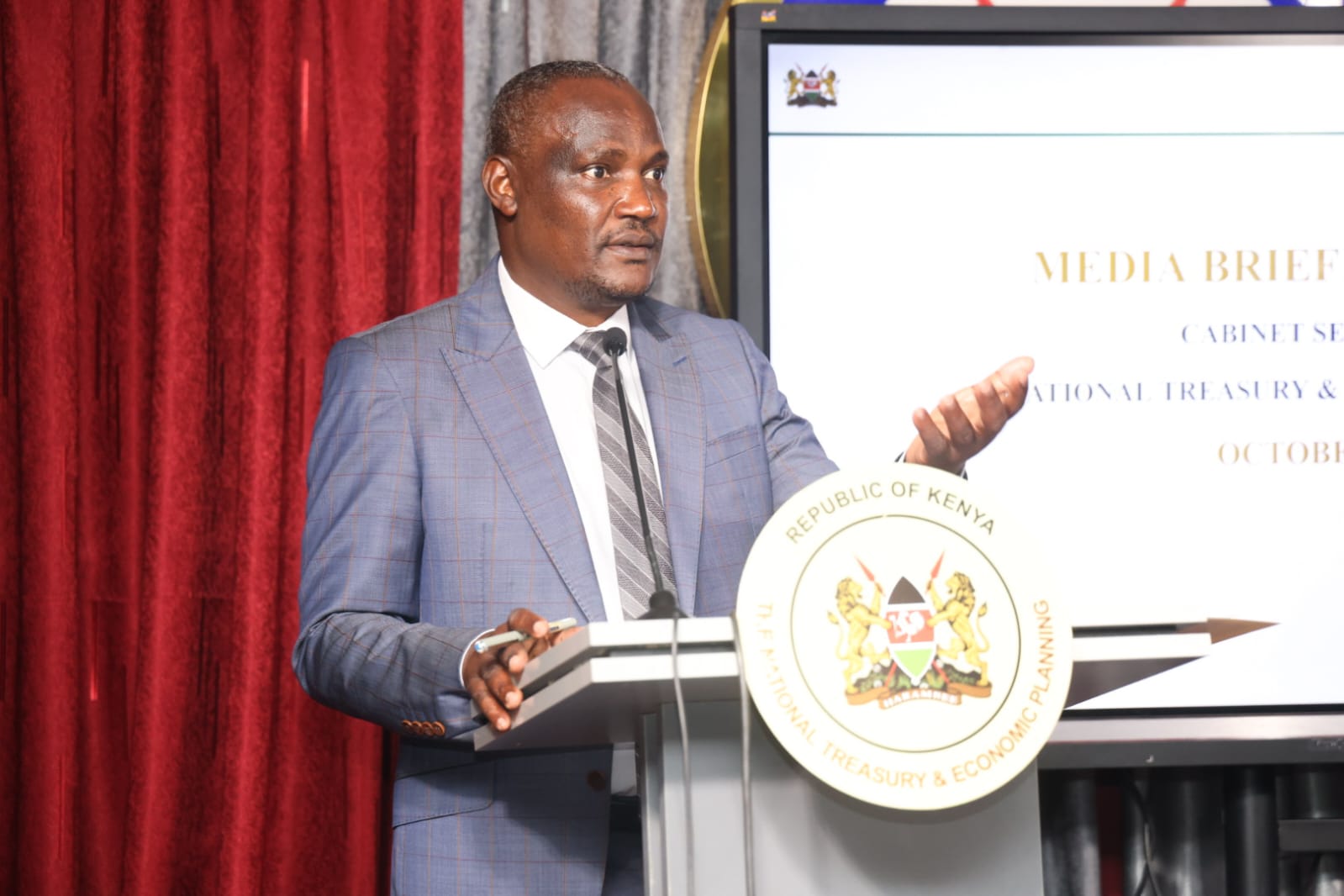
The National Treasury & Economic Planning Cabinet Secretary, John Mbadi, on October 7, 2025, confirmed that the government had completed the conversion of three railway construction loans from China Exim Bank, a shift aimed at easing the burden of dollar-denominated debt. The swap will see Kenya save about $215 million annually in interest payments, Mbadi said, adding that the plan “kicks off immediately, and it is a saving in our fiscal space.”
The loans, initially worth $5 billion and taken between 2014 and 2015 for the construction of the Standard Gauge Railway (SGR) from Mombasa to Naivasha, had an outstanding balance of $3.5 billion by June last year, according to the National Treasury.
Under the new agreement, Kenya’s loans attract lower yuan-based interest rates compared to the previous floating dollar rates. The repayment period has also been extended, according to President William Ruto’s chief economic adviser, David Ndii, who revealed that the government had “reprofiled maturities” to further ease the repayment pressure.
The move is part of the Ruto administration’s broader strategy to stabilise public finances and reduce the impact of Kenya’s heavy dollar exposure. Currently, 68% of the country’s external debt is dollar-denominated, making repayments costlier when the shilling weakens.
However, the IMF has urged caution, warning that while such currency swaps may reduce borrowing costs, they also carry hidden risks if not properly managed. “While these transactions may lower costs, they can also introduce currency risks depending on their structure,” the IMF said in a statement. The lender encouraged Kenya and other countries pursuing similar strategies to integrate them into “comprehensive medium-term debt and reserve management strategies to ensure an appropriate balance between cost and risk.
The IMF’s remarks come amid a growing trend among developing nations to shift part of their debt from dollars to yuan as China deepens its global financial influence. Ethiopia, for example, is negotiating to convert part of its $5.38 billion debt to Beijing into yuan after defaulting on a $1 billion Eurobond. Similarly, Sri Lanka is seeking the yuan equivalent of $500 million for a highway project, while Hungary has turned to panda bonds worth five billion yuan.
Analysts say that while Kenya’s decision offers immediate fiscal relief, it may require the country to adjust its foreign reserves portfolio. “Yuan loans will force nations to diversify a portion of national reserves to yuan as well,” said Deepak Dave, director at Johannesburg-based Autonomi Capital, noting that smaller economies could struggle with such diversification if they depend heavily on the US dollar for trade.
For now, Kenya is banking on the savings and extended repayment periods to stabilise its debt position, which currently stands at approximately 70% of GDP. The Treasury has also begun securitising revenue to raise funds for key infrastructure projects such as the SGR extension to the Ugandan border and the upgrade of Jomo Kenyatta International Airport.
As the country projects a $215 million annual reprieve, the IMF’s caution serves as a reminder that while switching currencies may ease short-term fiscal pain, it also demands disciplined management to prevent a new wave of debt challenges from emerging in the future.