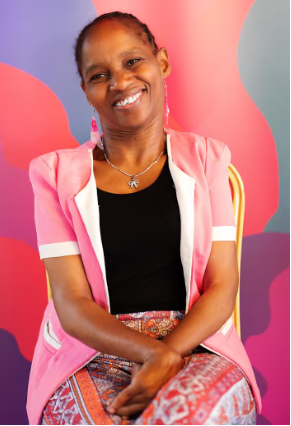
Josephine Mwende arrived early at our offices in Upper Hill, Nairobi. When her taxi pulled up, however, getting out proved difficult.
Living with cerebral palsy, a neurological condition that can affect posture, movement, and coordination, Josephine needed extra time and effort to make her way out of the vehicle. The taxi driver helped her carry her handbag and personal effects. She says this is the exception. In most cases, people do not understand and discriminate her based on her condition.
One such case was when she was in labor. She had been going to a Nairobi based health facility for her prenatal clinic and had been assured that the facility would be ready to assist her give birth.
“They had told me that NHIF (the now defunct Public Health Insuarer) would fully cover my expenses but when it came time to give birth they changed tune and said it wouldn’t be possible. ” She says.
“But that’s not the painful part.” She says visibly struggling to fight back tears, ” I remember this nurse who told me straight to my face that they do not handle people like me.”
Mwendes’ case is not isolated, hundreds of thousands of Kenyan women go through one form or the other of Obstetrics Violence (OBV); most without even knowing.
The International Confederation of Midwives defines Obstetric violence as the mistreatment of women during childbirth, which can manifest in various forms including physical violence, loss of autonomy; being subjected to any clinical intervention without appropriate informed consent; being shouted at, scolded, humiliated, or threatened; and being ignored, refused, or receiving no response to requests for help.
Mwende was forced to seek help at the Kenyatta National Refferal Hospital.
“I moved from facility to facility and couldn’t get admitted, my biggest fear was that I could loose my life, my baby or they could be born with cerebral palsy just like me due to the delay and stress.” She opens up.
Stress during labour has been cited as a contributing factor to children developing cerebral palsy as it frequently leads to birth complications like oxygen deprivation or birth asphyxia.
Nguvu Collective, a women rights group based in Nairobi, is out to change the narrative, through Githunguri M.P Gathoni Wamuchomba they are pushing for the passage of the Obstetric Violence (OBV) Bill.
If passed into law, medical professionals or facilities found guilty of perpetrating OBV will face stiff penalties such as fines ranging from KES 500,000 to 1 million and jail terms of up to 5 years
“Right now women are suffering because there is no law protecting them. If our M.Ps pass this bill there will be consequences for negligent medics.” Harriet Afande from Nguvu Collective states.
According to Afande, the most prevalent form of OBV is emotional and psychological abuse that is manifested in shouting, scolding, and ignoring a patient’s pain.
“This is the case because verbal abuse in the maternity room has been normalized.
It is common knowledge that midwives use derogatory language against women in labor. Nobody stops and sees this as an abuse. “
Deborah Monari, a nurse and advocate for medical and social justice, says that compassion fatigue is among the drivers of obstetrics violence.
“Some of them have seen a lot. They are stressed by their working environment and as a coping mechanism, they just detach themselves from their emotions.” She says.
“But some people just tend not to do their best, they just are not good people. They thrive because of lack of accountability. ” She adds.
According to a research commissioned by Nguvu Collective, nurses are the biggest perpetrators of OBV at 51%, doctors at 25%, non clinical staff come third at 19%.
Women seeking maternity care were more likely to experience OBV at Public health facilities, with thr government owned hospitals contributing to 59% of the recorded cases.
16% of the incidents occurred in private care institutions, 5% in faith based facilities, 4% in health centres: 4% of cases occurred within community health centers and 2% in maternity clinics.